
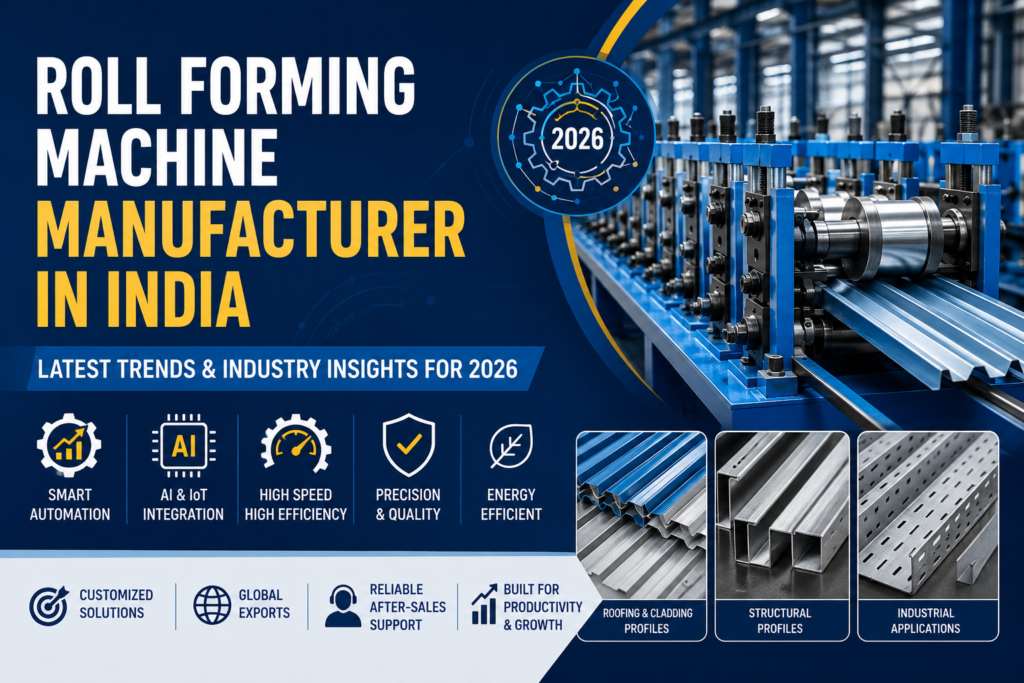
The manufacturing sector is evolving rapidly, and businesses are increasingly adopting automation, smart technologies, and precision engineering to remain competitive. As industries seek efficient production solutions, partnering with a trusted Roll Forming Machine Manufacturer in India has become more important than ever. Companies today require machinery that not only delivers high production output but also offers reliability, flexibility, and long-term value.
Allied Ispat, a leading Roll Forming Machine Manufacturer in India, continues to help manufacturers improve productivity through advanced roll forming solutions designed for modern industrial requirements. With the rise of Industry 4.0, Artificial Intelligence (AI), Industrial Internet of Things (IIoT), and smart manufacturing systems, roll forming technology is experiencing significant transformation in 2026.
For business owners, infrastructure developers, metal fabricators, and industrial manufacturers, understanding these trends is critical when investing in new machinery. This comprehensive guide explores the latest industry developments, technological advancements, and future opportunities shaping the roll forming industry in India.
What is a Roll Forming Machine and How Does It Work?
A roll forming machine is a continuous metal forming system that transforms flat metal sheets or coils into specific profiles through a series of roller stations.
Unlike traditional fabrication methods, roll forming provides consistent results with minimal material waste.
How the Process Works
The production process typically involves:
Coil Feeding
Metal coils are loaded into the machine through a decoiler.
Progressive Forming
The material passes through multiple roller stations that gradually shape the profile.
Cutting Operation
After forming, products are cut to predetermined lengths.
Finished Product Output
The completed profile is delivered for packaging or further processing.
Materials Processed by Roll Forming Machines
Modern machines can process:
- Galvanized Steel
- Mild Steel
- Aluminum
- Stainless Steel
- CR Coils
- HR Coils
- PPGI Coils
- Color-Coated Steel
This versatility makes roll forming technology essential across multiple industries.
What Are the Latest Trends in Roll Forming Machines for 2026?
The roll forming industry is undergoing a technological revolution.
Manufacturers are investing heavily in automation, smart controls, and digital manufacturing systems to improve productivity and reduce operational costs.
Smart Manufacturing Integration
Modern roll forming equipment now supports:
- Real-time monitoring
- Data analytics
- Remote diagnostics
- Performance optimization
AI-Based Production Systems
Artificial Intelligence helps manufacturers:
- Predict machine issues
- Optimize production schedules
- Improve quality control
Increased Automation
Fully automated production lines are becoming the industry standard.
Energy-Efficient Designs
Manufacturers are focusing on reducing power consumption while maintaining high output.
Flexible Manufacturing Systems
Businesses increasingly require machines capable of producing multiple profiles using a single setup.
These trends are reshaping the future of the Roll Forming Machine Manufacturer in India industry.
Why is Automation Important in Roll Forming Technology?
Automation has become a necessity rather than a luxury.
Modern manufacturers face increasing pressure to:
- Reduce production costs
- Improve quality
- Meet tight deadlines
- Increase output
Automation addresses these challenges effectively.
Improved Production Speed
Automated machines operate significantly faster than manual systems.
Reduced Human Error
PLC-controlled systems ensure consistent operation.
Better Quality Control
Automated processes maintain uniform dimensions throughout production.
Lower Labor Dependency
Businesses can optimize workforce allocation.
Automation is one of the key reasons manufacturers are upgrading their facilities in 2026.
How Is Automation Transforming the Roll Forming Industry?
Automation is changing every aspect of manufacturing operations.
Faster Setup Times
Modern machines support quick profile adjustments.
Consistent Product Quality
Automation eliminates variations caused by manual operations.
Improved Traceability
Manufacturers can track production performance in real time.
Higher Equipment Utilization
Machines spend more time producing and less time idle.
These benefits help businesses remain competitive in today’s fast-changing market.
What Role Does Artificial Intelligence Play in Roll Forming Technology?
Artificial Intelligence is one of the most exciting developments in manufacturing.
AI-powered systems help manufacturers make data-driven decisions.
Predictive Maintenance
AI detects early warning signs before breakdowns occur.
Quality Optimization
Machine learning algorithms identify production inconsistencies.
Production Planning
AI helps optimize production schedules based on demand forecasts.
Operational Efficiency
Smart systems continuously analyze performance and recommend improvements.
For manufacturers working with a modern Roll Forming Machine Manufacturer in India, AI-driven technologies offer significant advantages.
How Are Smart Roll Forming Machines Transforming Manufacturing?
Smart roll forming machines combine automation, AI, sensors, and connectivity.
Real-Time Monitoring
Operators can monitor performance through digital dashboards.
Remote Diagnostics
Technical teams can identify issues without being physically present.
Performance Analytics
Data insights help improve efficiency and reduce costs.
Faster Decision Making
Real-time information supports better operational planning.
These innovations are helping manufacturers transition toward smart factories.
Why Are Smart Roll Forming Machines Becoming Popular?
The popularity of smart machines continues to grow because they provide:
Greater Productivity
Manufacturers can increase output without sacrificing quality.
Lower Downtime
Predictive monitoring prevents unexpected failures.
Improved Profitability
Operational efficiencies directly improve margins.
Better Resource Management
Businesses can optimize labor, energy, and material utilization.
As digital manufacturing expands, smart machinery adoption is expected to accelerate further.
Which is the Best Roll Forming Machine Manufacturer in India?
The best manufacturer is not necessarily the cheapest supplier.
Businesses should evaluate:
Engineering Expertise
Experienced manufacturers design reliable and durable machines.
Product Quality
Machine accuracy directly impacts production performance.
Customization Capabilities
Every business has unique manufacturing requirements.
After-Sales Support
Reliable support ensures long-term machine performance.
Industry Reputation
A proven track record often indicates reliability and customer satisfaction.
When selecting a Roll Forming Machine Manufacturer in India, businesses should focus on overall value rather than price alone.
What Industries Use Roll Forming Machines the Most?
Roll forming technology serves a wide range of industries.
Construction Industry
Applications include:
- Roofing sheets
- Wall cladding
- Deck sheets
- Structural profiles
Automotive Industry
Manufacturers produce:
- Reinforcement components
- Structural sections
- Vehicle body parts
Infrastructure Sector
Roll formed products are widely used in:
- Warehouses
- Bridges
- Industrial buildings
Renewable Energy Industry
Solar mounting structures increasingly rely on roll formed sections.
Electrical Industry
Applications include:
- Cable trays
- Electrical enclosures
- Support systems
What Industries Are Driving Demand for Roll Forming Machines?
Several industries are contributing to growing demand in 2026.
Infrastructure Development
Large-scale construction projects require precision steel components.
Renewable Energy Projects
Solar and wind energy sectors need specialized profiles.
Industrial Warehousing
The rise of logistics facilities has increased demand for roll formed products.
Automotive Manufacturing
Vehicle manufacturers continue investing in lightweight steel solutions.
Smart Cities Development
Urban infrastructure projects require high-quality fabricated components.
These sectors are creating significant growth opportunities for every Roll Forming Machine Manufacturer in India.
What is the Future of Roll Forming Technology in India?
India’s manufacturing sector is expanding rapidly.
Several factors will drive future growth:
Increased Automation Adoption
Manufacturers are modernizing production facilities.
Industry 4.0 Implementation
Smart manufacturing technologies will become mainstream.
Export Growth
Indian manufacturers are expanding globally.
Sustainable Manufacturing
Energy-efficient machinery will gain greater importance.
Customized Production Solutions
Businesses increasingly require flexible manufacturing systems.
The future of roll forming technology in India appears highly promising.
How Do Automated Roll Forming Machines Improve Productivity?
Automation has become one of the biggest drivers of manufacturing efficiency in 2026.
Modern automated machines help businesses achieve:
Faster Production Cycles
Continuous operation enables manufacturers to increase output significantly.
Improved Accuracy
Automated controls maintain dimensional consistency across every profile.
Reduced Human Intervention
Manufacturers can optimize labor resources and reduce manual errors.
Better Material Utilization
Precise forming minimizes wastage and improves profitability.
For businesses seeking growth, investing in automation delivers long-term operational advantages.
How Do Modern Machines Improve Production Efficiency?
Today’s roll forming systems are designed for maximum efficiency.
High-Speed Operations
Modern machines can maintain continuous production with minimal interruptions.
Consistent Product Quality
Precision engineering reduces defects and rejection rates.
Reduced Setup Time
Advanced controls simplify profile changes and machine adjustments.
Better Resource Management
Manufacturers can optimize labor, energy, and raw material consumption.
These improvements directly contribute to increased profitability.
What Are the Advantages of CNC-Controlled Roll Forming Machines?
CNC technology has significantly improved machine performance.
Greater Accuracy
Computer-controlled systems ensure profile precision.
Higher Repeatability
Every product maintains identical specifications.
Reduced Material Waste
Accurate control minimizes production losses.
Easier Operation
User-friendly interfaces simplify machine management.
Improved Productivity
Manufacturers can maintain high output with greater consistency.
CNC technology has become a key feature offered by leading Roll Forming Machine Manufacturers in India.
What Are the Benefits of High-Speed Roll Forming Machines?
High-speed systems are becoming increasingly popular among industrial manufacturers.
Increased Production Capacity
Businesses can meet large customer demands more efficiently.
Lower Cost Per Unit
Higher productivity improves overall profitability.
Faster Project Completion
Manufacturers can shorten delivery timelines.
Competitive Advantage
High-speed operations help companies serve customers more effectively.
What Factors Should I Consider Before Buying a Roll Forming Machine?
Selecting the right machine requires careful planning.
Production Requirements
Evaluate expected daily and monthly output.
Material Compatibility
Ensure the machine supports intended materials.
Automation Level
Choose between semi-automatic and fully automatic systems.
Future Expansion
Invest in machines capable of supporting long-term growth.
Technical Support
Reliable after-sales service is essential for continuous operations.
Return on Investment
Consider long-term value rather than only initial purchase cost.
How Much Does a Roll Forming Machine Cost in India in 2026?
Machine pricing depends on several variables.
These include:
- Automation level
- Production speed
- Profile complexity
- Material thickness
- Hydraulic systems
- PLC controls
- Customization requirements
High-performance machines may require greater investment initially, but they typically provide better productivity and long-term returns.
What is the Production Capacity of Modern Roll Forming Machines?
Production capacity depends on:
Machine Configuration
Different profiles require different production speeds.
Material Thickness
Thicker materials may influence output rates.
Automation Systems
Advanced machines generally achieve higher productivity.
Product Complexity
Complex profiles require additional forming stages.
Manufacturers should discuss their production targets with their chosen Roll Forming Machine Manufacturer in India before finalizing machine specifications.
What Materials Can Be Processed Using Roll Forming Machines?
Modern machines are capable of processing:
- Galvanized Steel
- Mild Steel
- Aluminum
- Stainless Steel
- PPGI Sheets
- Color-Coated Sheets
- CR Coils
- HR Coils
This flexibility allows manufacturers to serve multiple industries.
What is the Difference Between Manual and Automatic Roll Forming Machines?
Manual Machines
Advantages include:
- Lower investment cost
- Suitable for smaller production volumes
Limitations include:
- Lower productivity
- Greater labor dependency
Automatic Machines
Benefits include:
- Higher production capacity
- Better consistency
- Reduced labor requirements
- Greater efficiency
Most industrial manufacturers now prefer automatic systems due to their superior performance.
How Energy-Efficient Are Modern Roll Forming Machines?
Energy efficiency is becoming increasingly important.
Modern equipment incorporates:
Efficient Motors
Reduce electricity consumption.
Optimized Hydraulic Systems
Improve operational efficiency.
Smart Controls
Help minimize unnecessary power usage.
Sustainable Manufacturing Practices
Support environmental goals while reducing operating expenses.
Energy-efficient machinery helps businesses improve profitability over the long term.
Can Roll Forming Machines Be Customized for Specific Industries?
Yes.
Customization is one of the major advantages offered by a professional Roll Forming Machine Manufacturer in India.
Customization options include:
- Profile design
- Machine speed
- Decoiler capacity
- Hydraulic systems
- Cutting systems
- Automation features
- Material thickness range
Customized solutions help businesses maximize productivity and reduce wastage.
How Do AI and IoT Impact Roll Forming Machines?
Artificial Intelligence and Industrial Internet of Things (IIoT) are transforming manufacturing.
Real-Time Monitoring
Operators receive instant machine performance updates.
Predictive Maintenance
AI identifies potential issues before breakdowns occur.
Remote Diagnostics
Technical teams can provide support from any location.
Data Analytics
Manufacturers gain valuable insights for improving efficiency.
These technologies are helping businesses move toward smart manufacturing ecosystems.
What Are the Maintenance Requirements of Advanced Roll Forming Machines?
Proper maintenance ensures reliable operation.
Lubrication
Moving components should be lubricated regularly.
Roller Inspection
Rollers should be checked for wear and alignment.
Hydraulic System Maintenance
Hydraulic oil levels and pressure should be monitored.
Electrical System Inspection
PLC systems and electrical connections require periodic checks.
Cleaning Procedures
Removing dust and metal particles improves machine performance.
Preventive maintenance significantly increases machine lifespan.
What Safety Features Are Available in Modern Roll Forming Equipment?
Safety is a critical priority in industrial operations.
Important safety systems include:
Emergency Stop Buttons
Allow immediate machine shutdown.
Protective Guards
Prevent accidental contact with moving parts.
Sensor-Based Controls
Improve operational safety.
Overload Protection Systems
Protect machine components from damage.
Electrical Safety Mechanisms
Ensure safe machine performance.
Leading Roll Forming Machine Manufacturers in India prioritize operator safety and international standards.
How Does Predictive Maintenance Improve Machine Performance?
Predictive maintenance uses sensors and AI to monitor machine conditions.
Benefits include:
- Reduced downtime
- Early fault detection
- Lower maintenance costs
- Improved equipment reliability
- Increased productivity
This technology is becoming increasingly popular in Industry 4.0 manufacturing environments.
What Role Does Industry 4.0 Play in Roll Forming Technology?
Industry 4.0 is revolutionizing manufacturing through digital transformation.
Smart Factories
Machines communicate through interconnected systems.
Data-Driven Decisions
Manufacturers gain real-time operational insights.
Improved Efficiency
Automation and analytics optimize production.
Better Quality Control
Digital monitoring improves consistency.
Industry 4.0 is expected to define the future of every Roll Forming Machine Manufacturer in India.
Are Indian Roll Forming Machine Manufacturers Exporting Globally?
Yes.
Indian manufacturers are successfully exporting machinery to:
- Middle East countries
- Africa
- Southeast Asia
- Europe
- South America
Reasons Behind Global Demand
- Competitive pricing
- Strong engineering capabilities
- Customization expertise
- Reliable support services
- High-quality manufacturing standards
India has emerged as a major global manufacturing hub.
What Certifications Should a Roll Forming Machine Manufacturer Have?
Businesses should evaluate:
ISO Certification
Indicates quality management systems.
Quality Inspection Reports
Verify machine performance before dispatch.
Material Certifications
Ensure machine durability and reliability.
Testing Procedures
Demonstrate compliance with quality standards.
Certifications provide confidence and reduce investment risks.
Why Are Indian Roll Forming Machine Manufacturers Gaining Global Recognition?
Indian manufacturers are earning international trust because of:
Advanced Engineering Expertise
Modern facilities support precision manufacturing.
Competitive Pricing
High-quality solutions are available at attractive costs.
Customization Capabilities
Manufacturers provide solutions tailored to customer needs.
Growing Export Infrastructure
Efficient logistics support global deliveries.
Continuous Innovation
Indian companies are adopting AI, automation, and Industry 4.0 technologies.
How Can Businesses Reduce Production Costs Using Roll Forming Machines?
Roll forming technology helps businesses optimize costs through:
Reduced Material Waste
Precision forming maximizes raw material utilization.
Lower Labor Costs
Automation minimizes workforce requirements.
Higher Productivity
Increased output lowers production cost per unit.
Reduced Rework
Consistent quality minimizes defects.
Better Return on Investment
Efficient operations improve profitability.
Conclusion
As manufacturing industries continue embracing automation and digital transformation, choosing the right machinery partner becomes increasingly important. Businesses today require equipment that combines productivity, reliability, flexibility, and smart technologies.
Partnering with an experienced Roll Forming Machine Manufacturer in India enables manufacturers to improve efficiency, reduce costs, and remain competitive in rapidly changing markets.
With innovations such as Artificial Intelligence, IoT, Industry 4.0, predictive maintenance, and smart automation, the future of roll forming technology in India looks exceptionally promising.
For manufacturers, infrastructure developers, and industrial businesses, investing in advanced roll forming solutions today creates stronger opportunities for tomorrow’s growth.
Allied Ispat Mumbai Central
Address – Shop 69, Maulana Shaukat Ali Road, Chhota Sonapur, Siddharth Nagar, Mumbai Central, Mumbai, Maharashtra 400008
Phone no – 09821177009
Website – https://alliedispatindia.com/
Direction – https://maps.app.goo.gl/3fcyxWrTma38wGqa6